Venue Wireless RETHINK — Season 1 : Episode 4 – SHIFTING SANDS OF TECH
Venue Wireless RETHINK — Season 1 : Episode 4 – SHIFTING SANDS OF TECH
Todd Landry
August 27, 2026
On June 29th, 2026, at the annual Sports & Entertainment Alliance for Technology (SEAT) Conference I presented to a cross section of this industry, including sports clubs, solutions providers, 3PO’s, wireless carriers, and sports venue consultants. The session was titled Venue Wireless RETHINK – a MASTERCLASS. While many of these topics could be controversial among different attendees, I was pleasantly surprised to see a cross-section of this industry response very positively and join in the idea that it is time for a rethink in this industry and the approach to selecting and delivering cellular wireless infrastructure.
Season 1 : Episode 4 – SHIFTING SANDS OF TECH
There is a great deal of focus in the Sports & Entertainment venue space, and for good reason. Each venue represents a large-scale, high-dollar project. Each is on a regular upgrade cycle to stay competitive and draw fans. And each is a place where large numbers of mobile subscribers use their phones roughly ten times more than they normally would. Add the growing mobile use cases described in Episode 1 and the demand is clear. Because cellular “cells” are shared-capacity environments, keeping up means continually adding cell capacity to ensure competitive fan experiences. One analyst projection puts the stadium DAS market at $1.47 billion in 2024, growing to $3.2 billion by 2030. That is 14.2% compound annual growth.
As a practical matter, while each of the DAS suppliers has its own differences, in the end they are all variations on a radio frequency repeater. There is no real “intelligence” about the session itself — the actual mobile connection, its controls, analytics, data capacity, or other. DAS are specialists at combining radio frequencies, distributing them, and retransmitting them, and when you get right down to it, nothing more. That has become an issue for mobile operators: because DAS radios are decoupled from the carrier network processors, the carriers are left essentially blind to actual wireless RF radio performance, which limits their ability to optimize it or resolve issues around it.
What makes DAS distinctive is captured in an industry term — Neutral Host — a means of combining multiple carrier signal sources into a common distribution infrastructure. To stay competitive there are many DAS innovations occurring. One of them that the wireless industry has been putting a great deal of development energy into is called OpenRAN (ORAN).
So what’s the big scoop on ORAN, and how does it help?
It is best to understand that today’s decoupling of carrier signal processing from the DAS starts with analog. Yes — it is 2026, and we are still converting to an analog signal, feeding it into a DAS, and converting it again before retransmitting. See Figure 1. And any time you get the chance to walk a site behind the scenes, you will find — certainly in large venues — rack upon rack of radios (analog amplifiers) connected by coaxial cable to another location, where the DAS analog Point of Interface (POI) attenuates the signal to a usable level. Any technology innovator looks at this and shakes their head. Why?
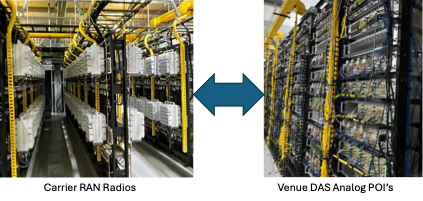
Figure 1- Analog Carrier Radios and DAS Analog POIs
But now there is ORAN. The part of the ORAN specifications that changes this is, in essence, a protocol definition — one that signal processor vendors such as Ericsson and Samsung have added to their products, and that some DAS vendors, namely JMA with their new JAZZ DAS platform. Through ongoing industry collaboration among vendors and carriers these are coming to fruition in the industry. Figure 2 depicts the before and after: the “from” and “to” of what ORAN brings. This matters for several reasons. It lowers cost, reduces space requirements, and reduces power requirements — and the protocol provides a far greater level of visibility across the two entities, the signal processors (or basebands) and the DAS.
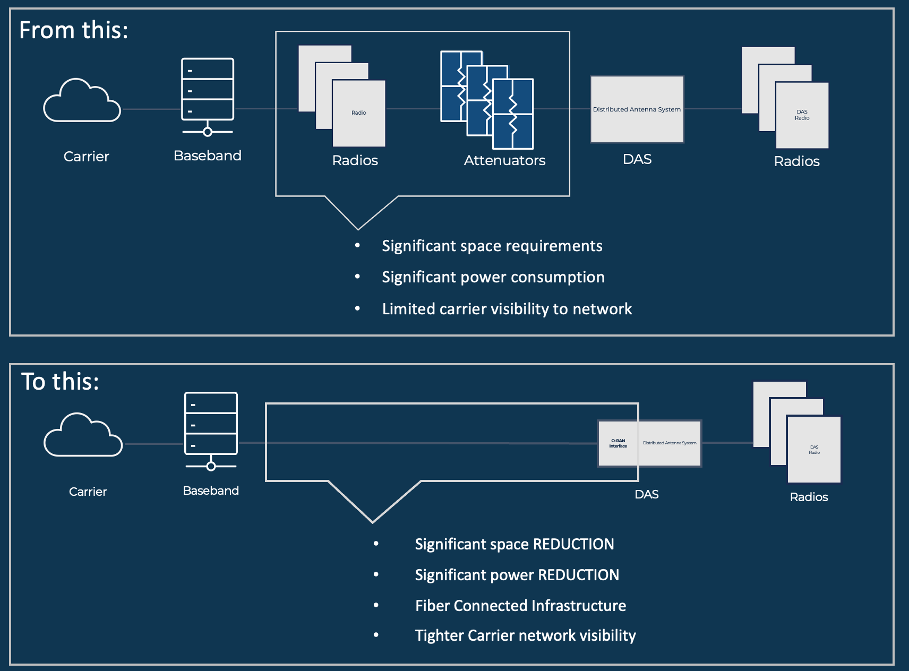
Figure 2 – The Fundamental Changes that ORAN Interfaces Brings
So is that it? Is that the whole change and shake-up we can expect in this sector?
Absolutely not!
Another approach is looming, and the jury may still be out on it. Ericsson — the largest-scale vendor and primary technology provider to all major U.S. carriers, with revenue north of $20 billion — dwarfs the DAS OEMs and DAS business units. Some ten years ago it introduced the Radio Dot platform, a neutral host system that looks and deploys more like IT networking and Wi-Fi equipment, but it has yet to reach a dominant position in the market. The Radio Dot itself is also not designed to solve for the most challenging coverage areas, such as a seating bowl with tens of thousands of mobile devices packed side by side.
Where it does fit well is low-ceiling space: back of house, suites, and even parts of the concourse. Because it is deployed like a Wi-Fi access point over Ethernet or fiber, it eliminates coaxial cabling entirely and appeals to an IT-centric approach. The cabling is a large part of the story, because of what I will call the 50X factor: it weighs 50X less, there are 50X more installers who can handle it, it is 50X less complicated to install, and it costs 50X less. Perhaps none of those are exactly 50X, and the industry’s counterarguments carry real validity — you have to distribute power, you have active electronics in the ceiling to maintain, and you need multiple Radio Dots to cover different bands. All are legitimate concerns. But these are precisely the tradeoffs in front of us right now. Lastly, I would be remiss not to mention that some DAS vendors offer Ethernet- and fiber-fed low-power radios that deploy much the same way, and demand for those has been on the rise.
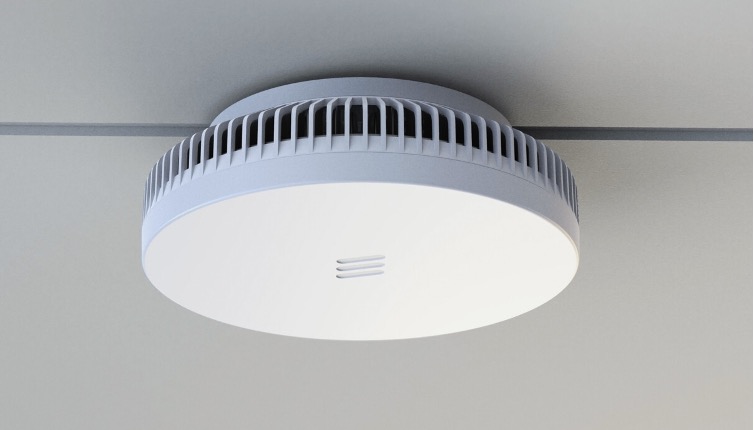
Figure 3 – The Ericsson Radio DOT
More recently, carriers have begun recommending products built on massive MIMO and beamforming, now available in their newer and wider spectrum bands such as C-band and T-Mobile’s Band 41. For many years this capability in stadiums was limited to the mmWave bands operating at 24–30 GHz. At one industry conference, the leadership of a large carrier declared from the stage: “No more DAS in stadium bowls!” That is an important declaration, and it should be read as the demand signal for change.
So be aware: a shake-up — or at least a potential one — is looming. ORAN, while interesting, is not enough on its own to change the future of mobile cellular connections in stadiums. It creates efficiency, but it does not and cannot have the same impact.
To explain that further: a very common approach to covering a venue bowl is to feed the analog signal into technology founded on the Luneburg lens. An RF cellular signal is injected into a spherically symmetric lens, which focuses it onto the opposite side and emits a perfectly collimated beam — or, in this case, many beams. Those beams can be shaped and optimized to provide multiple coverage areas down into the seating of a bowl.
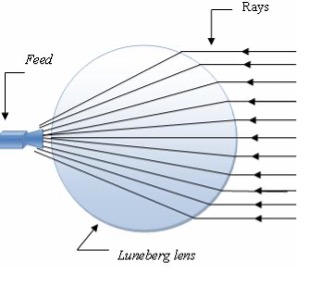
Figure 4 – The Luneburg Lens
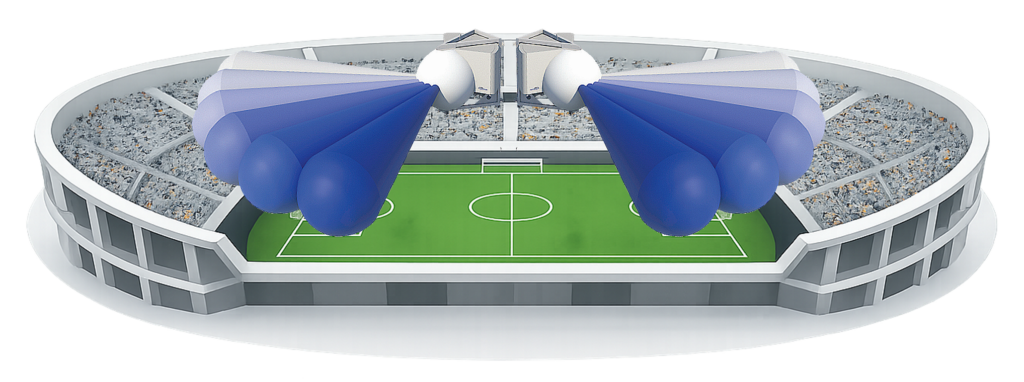
The best-known supplier of Luneburg lens products is MatSing, and the industry commonly refers to them as MatSing balls. Because they are most often fed their RF signal from a DAS, the beams can be multi-operator — neutral host — and cover several carriers at once. That said, a bowl usually takes many MatSing balls, each fed by a large number of coaxial cables, which in turn must be driven by fairly high-power banks of DAS radio units. The solution is by no means efficient in weight, cost, or space.
So what is different about these beamforming massive MIMO radios?
It is early, but two of the three carriers are already testing beamforming massive MIMO in at least one major NFL stadium. Characteristics and test results made public at the DASpedia conference earlier this year suggest these radios can significantly improve performance in the seating bowl, especially in the uplink direction, and that they radically reduce the amount of infrastructure equipment required. Look at the actual infrastructure requirements and the picture is consistent: far fewer physical radios, lighter mounting and weight loads, no coaxial cable at all, and by every measure a more efficient all-fiber solution than traditional DAS radios feeding antennas. All of this arrives at a time when 5G — and soon 6G — together with wider spectrum bands is already shifting the landscape, a subject for a future episode.
How do they work?
Massive MIMO radios pack many smaller antennas into a single enclosure, in arrays on the order of 64 by 64. Each unit is antennas plus radio amplifiers, with many amplifiers sitting behind the antenna array. They are smarter because the shape and direction of the beams can be changed dynamically, concentrating energy and capacity where mobile devices actually are, and at the moment those devices are actually demanding it. The simplest way to picture the difference: the current approach is fixed beams, and the newer approach is dynamic beams.
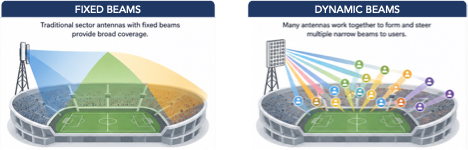
One challenge is that these antennas are highly specific to each carrier’s spectrum bands, so every location would need at least one unit per carrier. They are not neutral host. But it is worth asking whether neutral host begins to lose its value here — and what the term really means. The reality of a neutral host DAS is that it still has to carry and transmit each carrier’s bands independently; they simply happen to share one package.
Finally, here is the question you should take away from all of this. If a newer approach is emerging that moves the venue to an all-fiber or Category-cable infrastructure, shrinks the footprint, cuts power, and improves the mobile user experience — wouldn’t you want to learn more?
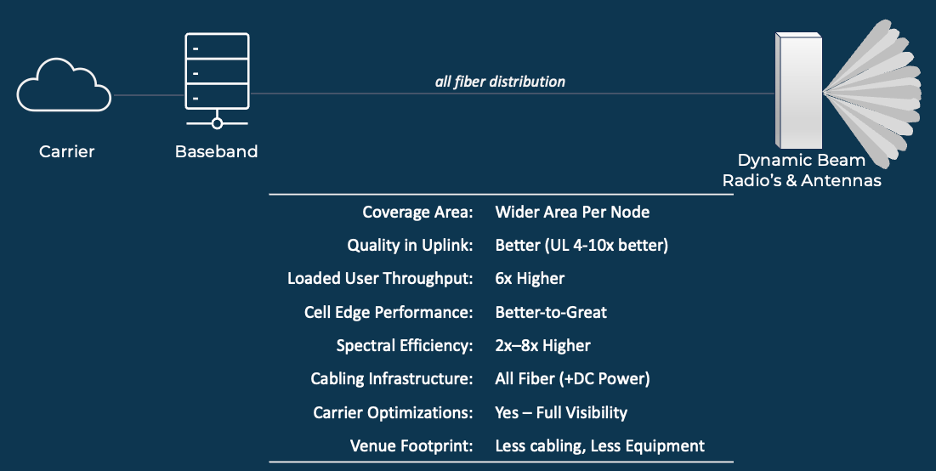
Figure 5 – Reference of Performance Benefits for MMIMO Beam Forming in TDD
The data in this chart can certainly be challenged, and in discussions with carriers it seems mileage varies with each design. What stands, though, is that there is a new way to achieve more performance and more control in a stadium bowl. Perhaps that is why Verizon is taking the stance it is.
Watch for the next episode, where we will talk about the changing tides of frequency spectrum and what you need to know about how it can and will be used.