Venue Wireless RETHINK — Season 1 : Finale – Season Wrap up
Venue Wireless RETHINK — Season 1 : Finale – Season Wrap up
Todd Landry
September 30, 2026
On June 29th, 2026, at the annual Sports & Entertainment Alliance for Technology (SEAT) Conference I presented to a cross section of this industry, including sports clubs, solutions providers, 3PO’s, wireless carriers, and sports venue consultants. The session was titled Venue Wireless RETHINK – a MASTERCLASS. While many of these topics could be controversial among different attendees, I was pleasantly surprised to see a cross-section of this industry response very positively and join in the idea that it is time for a rethink in this industry and the approach to selecting and delivering cellular wireless infrastructure.
Season 1: Finale – Season Wrap up
Those who are leaders and owners of sports and entertainment venues and are savvy and aware of the market shifts will seek more detailed definitions of their infrastructure plans, develop a more articulate strategy, plan for ways to extract value from the infrastructure, and will seek out partners that can assist then and that understand how to view wireless infrastructure as a digital service platform for their venues.
The wireless industry, and those on the selling side, focus on at least three types of wireless infrastructure: Wi-Fi, cellular coverage, and private cellular wireless.
Today, each of these requires the venue to consider the capital outlay to build the infrastructure, as the days of carrier funded cellular (DAS) are all but gone. Summarizing some key points of each of these:
Wi-Fi
- Utilized to connect more than just fans who wish to use Wi-Fi, systems such as retail transaction devices (mobile, fixed, etc.) connect over Wi-Fi (if not wired).
- Use by fans becomes only necessary if the cellular capacity is lacking, or for those fans whose philosophy is to always seek out and connect to Wi-Fi – a small number when you consider the demographics of today’s ticket purchasers.
- Wi-Fi has been a challenge in super high-density venues when used in volume, yet vendors have innovated in new ways to increase performance – such as Cisco’s Aironet platform that applies more advanced radio resource management to create more isolated Wi-Fi zones, and more recently Matsing beam antennas for Wi-Fi radios.
Cellular Coverage
- Traditionally, these are large-scale Distributed Antenna Systems (DAS) that require 10,000s of feet of coaxial cables, and one certainly must ask, “coax in the year 2026?”
- The connection points from carrier signal processing are highly decoupled via analog interfaces, and while the cost of power for the amplifiers has been the primary focus on optimization the real issue is the lack of signal visibility and the ability to dynamically control signal distribution. That said, technology that creates a digital interface between carrier equipment and the DAS helps – with Andrew (previously CommScope) as the leader in forging this capability certified with carriers and now JMA Wireless and SOLiD adding this to their portfolio.
- More importantly for venues is newer innovations that deliver the signal all the way to the antennas using fiber optics or even category cabling (Ethernet wires), essentially eliminating the need for coaxial cables. Small footprint devices made by Ericsson that resemble Wi-Fi access points, known as Radio DOTs, show promise as a new methodology for coverage solutions.
- Radio DOTs are designed to work in office-like locations, so they are good for lower ceiling areas of the venues, but they do not work for the seating bowls. For this newer technology, which we discussed in a previous episode, Massive MIMO beamforming radios promise to be the end game for seating bowls. Not only do these radios get directly connected via fiber optics (eliminating 100% of coaxial cabling) but employ AI-ish intelligence that can optimize their beams to deliver performance where users are.
Cellular Private Wireless
- Founded mainly on the Citizens Band Radio Service (CBRS) spectrum that was made available commercially around 2020 this cellular layer can be used as a private cellular IT network.
- CBRS networks and the ecosystem of devices has been growing, but the rate of adoption has been somewhat limited – or most certainly slow growth relative to expectations.
- The cost of a CBRS system is considered high, and this is mainly because it isn’t always clear what venues can use it for, so the business case justification is more challenging.
- In addition, we now have the mobile networks operators offering an ability use the public (or MNO) spectrum for private use cases, giving venues private SIMs for devices and an ability to offload the traffic locally. This add-on to the coverage networks makes it easier to consider, since the infrastructure is often already there.
- Either selection can make sense for venues, as it is simply a business case that must examine the use cases and needs and then apply the right technology.
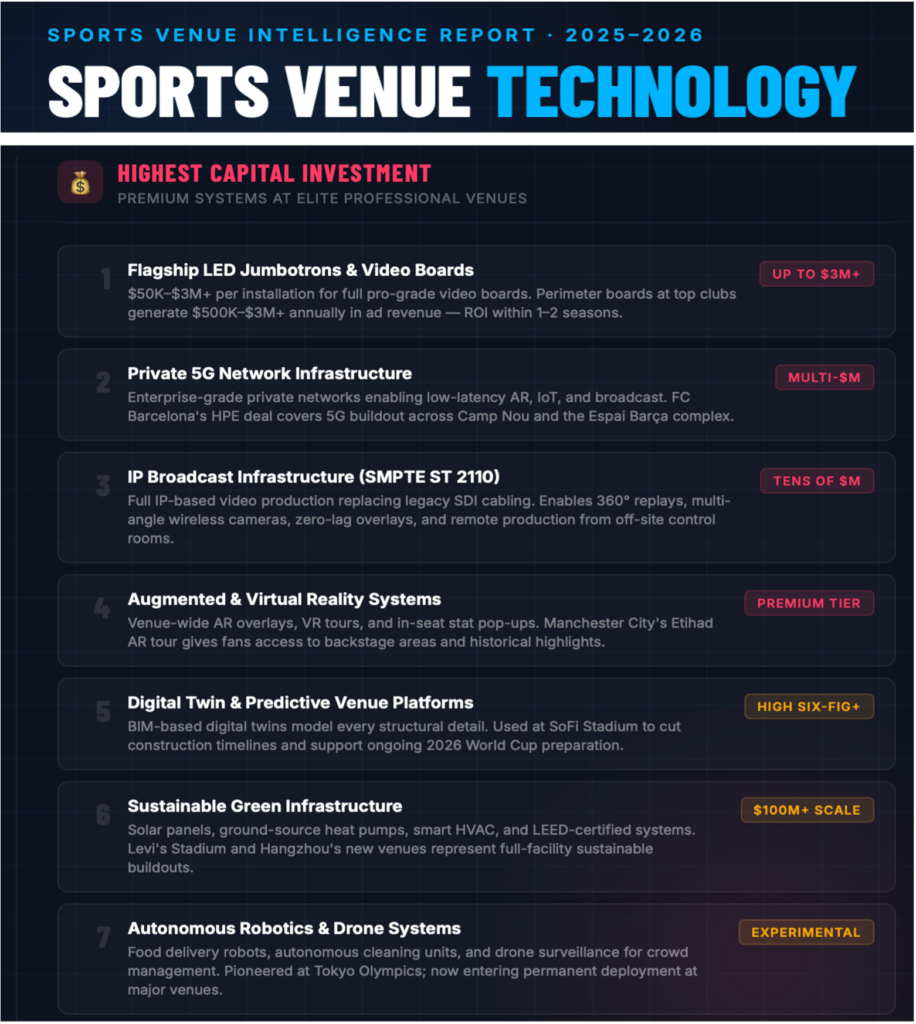
Figure 1 – Private 5G Among the Costliest Considerations for Venues
Drive Towards and Analysis of Mobile Use Cases
As illustrated by my chart below, there are many use cases that venues should consider when determining how best to connect them. Some have been done using wires for years, but now the opportunity to mobilize exists. Others have been put on Wi-Fi but the use case experiences challenges due to the data demand during events and could be considered for cellular. Many devices are already equipped with cellular capable chips and the move may be a fairly low hurdle with great benefits.
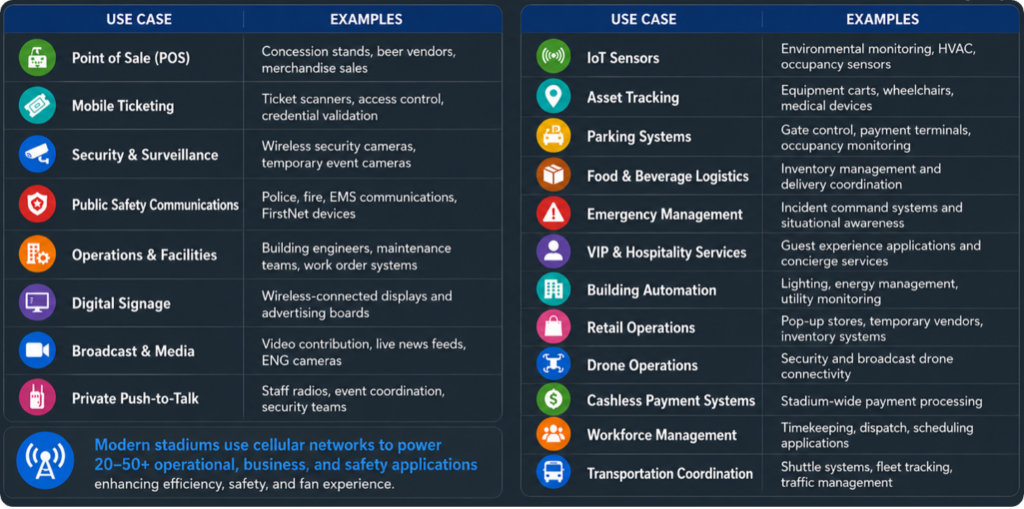
Figure 2 – Sample Use Cases Venues Should Consider
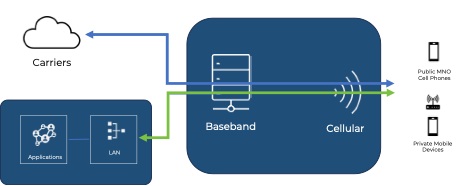
What does a Public Spectrum Cellular Private Layer Look Like
While this topic has different labels, with “slicing” being a popular one, and its use and merits are sometimes controversial, the technical facts are simple. Here are some of the key things to understand:
- The venue would receive SIMs for enabling devices, as long as these devices support the bands on the infrastructure.
- The venue would have a “hop-off” for the devices’ data connections, which they can map into their own local networks, security topologies, and related applications.
- The slice is most likely one of two things: a) simply just another connected device sharing the capacity or b) an identified device (the SIMs) that get traffic priority on the cellular scheduler (note, a cellular system has priority schemes much like LAN priority schemes).
- The key benefit: uses the same infrastructure that is used for the operator’s mobile subscribers.
Season Conclusions
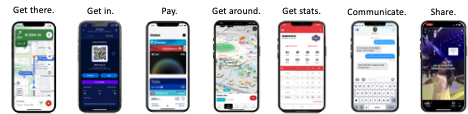
Clearly, wireless (untethered) connectivity will continue to rule and remain in demand. Moreover, the demand for a connected fan experience—from getting there, to spending money there, to sharing their experience—will continue to increase. Make sure you start here—and project what your fans will expect.
The world of venue partners (3POs, neutral hosts) is separating. First, are those who see the world only through the older DAS and carrier-funded lens. These are not partners that will help you with a proper strategy that is good for your venue. Then, there are partners who have the relationships, technology, and business vision to truly construct a path to best leverage your infrastructure. Choose wisely.
The world of spectrum, and thus capacity, is ever-changing and will most certainly continue to grow. In addition, the technology is shifting and there are unique benefits from future (some here today) approaches. You need to have a partner that is well versed in this and is decoupled from a single OEM vendor and from dollars (such as partnership / sponsorship driven teams) so that you have clear facts on what is efficient and what will create the best fan and operations experience.
Ready to rethink your approach? Contact HALO Networks to start the conversation.